Recycling and Sustainability at Greenwich House Clearance
At Greenwich House Clearance we take a practical, measurable approach to creating an eco-friendly waste disposal area across the borough. Our household clearance work is designed to prioritise reuse and recycling over landfill, combining careful sorting on-site with partnerships in the local circular economy. We manage bulky clearances, small removals and sensitive waste streams while keeping a clear focus on carbon reduction. Our mission is to increase reuse, divert waste from landfill and support sustainable rubbish area practices throughout Greenwich and neighbouring boroughs.Our recycling percentage target
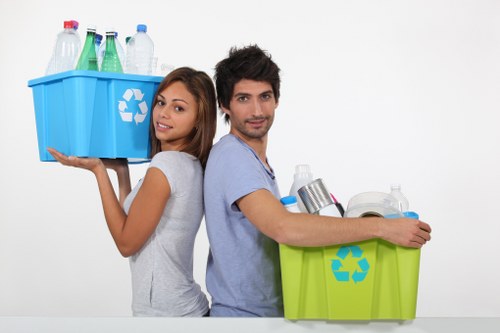
We have set an ambitious recycling percentage target: to achieve a 75% diversion rate of recoverable materials from house clearances by 2028. This target covers reuse, repair, recycling and composting where appropriate. Our target is reviewed annually and reported internally, with progress driven by improved sorting, better donation flows and stronger links to Materials Recovery Facilities (MRFs). Achieving this target helps reduce the pressure on local waste infrastructure and supports a lower-carbon, more circular approach to household rubbish.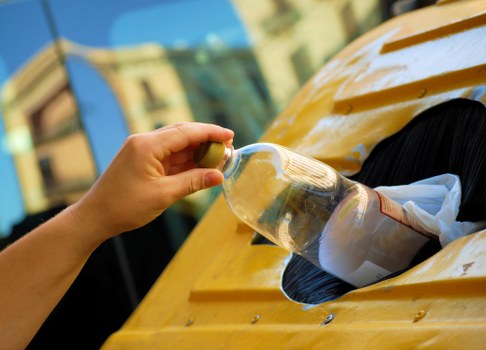
What we collect and recycle
We operate an extensive separation process so that each item has the best possible end destination. Typical streams include:- Furniture and large items suitable for reuse or donation
- WEEE (electricals and appliances) for specialist recycling
- Textiles and clothing diverted to charity banks
- Paper, card, glass and metals taken to MRFs
Local transfer stations and recovery partners
We work closely with local transfer stations and regional recovery hubs serving south-east London. These facilities handle collected recyclables and direct reusable goods to specialist reprocessing centres. By routing sorted loads to trusted transfer stations and MRFs, we reduce double handling and ensure materials enter the correct recycling streams quickly and efficiently. Our logistics teams audit partner facilities regularly and prefer operators with clear environmental policies and transparent recovery rates.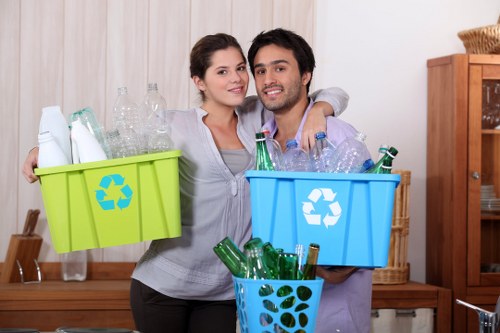
Partnerships with charities and social enterprises
A core part of creating a sustainable rubbish area is keeping items in use. We partner with local charities, furniture reuse groups and national social enterprises — including reputable furniture reuse networks and clothing banks — to redistribute items that are suitable for reuse. These partnerships support local communities, reduce waste, and provide low-cost household goods to people in need. Donations are catalogued, cleaned and transported to charity partners; materials beyond reuse are passed on to specialist recyclers.Low-carbon vans and greener logistics Our fleet includes hybrid and electric vans for inner-borough collections, and optimised route planning to lower fuel use and emissions. Where city centre or low-emission zones apply we deploy fully electric vehicles and, for short-distance pickups, cargo bikes where practical. Regular vehicle maintenance, eco-driving training for crews and consolidation of loads are standard practices to strengthen our low-carbon credentials and reduce the environmental footprint of every clearance.
Handling hazardous and bulky waste responsibly
Not all items can be reused or recycled in the same way. We operate with licensed carriers and use certified facilities for hazardous streams such as batteries, fluorescent tubes and specific WEEE items. Bulky inert materials and construction residues are separated and, where possible, recovered by specialist processors. These safeguards ensure hazardous components are disposed of or treated in compliance with regulatory standards and local borough requirements for separation and transfer.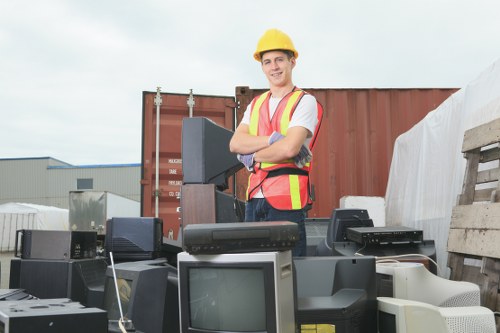
Supporting the circular economy and local reuse
We actively promote repair, refurbishment and upcycling to extend the life of furniture and household items. Through community workshops, collaborations with social enterprises and targeted reuse initiatives we encourage items to be repurposed instead of discarded. Greenwich House Clearance also supports local composting and green-waste schemes when garden clearances produce organic material suitable for compost, diverting this from landfill to community composting projects or green-waste processors.